When It Goes Wrong,Everyone Looks Around.Be The One Who Moves.
Advanced taught you to handle yourself at depth. Rescue teaches you to handle the dive when someone else cannot — reading stress before it becomes panic, and knowing exactly what to do in the ninety seconds that decide the outcome.
Nha Trang · Hòn Mun · $425 + $100 EFR = $525 · EFR current? $425
Four Moments That Decide a Dive
None of these are rare. Every one of them is survivable — as long as somebody in the water knows what to do next.
The Breathing Changes
Your buddy is at 22 m and their breathing rate climbs. Wide eyes behind the mask, hands reaching for nothing. You can see it happening. You do not know whether to signal, hold on, or start the ascent.
The Wave That Is Not a Wave
Someone is on the surface with one arm up, not moving toward the boat. From forty metres away it looks like a greeting. Trained divers know it usually is not.
Three Up, Four Went Down
The group surfaces one diver short. What happens in the next ten minutes is either a planned search pattern with assigned roles — or a lot of shouting and guessing.
The Diver Who Will Not Wake
You get them to the surface and they are not breathing. There is oxygen in a box on that boat, and rescue breaths start now or they do not start at all.
Nobody plans to be the rescuer. You simply turn out to be the closest one. Rescue Diver is the three days that put the difference between watching and acting into your hands.
From Capable Diver to the One They Count On
What three days actually change about the way you dive with other people
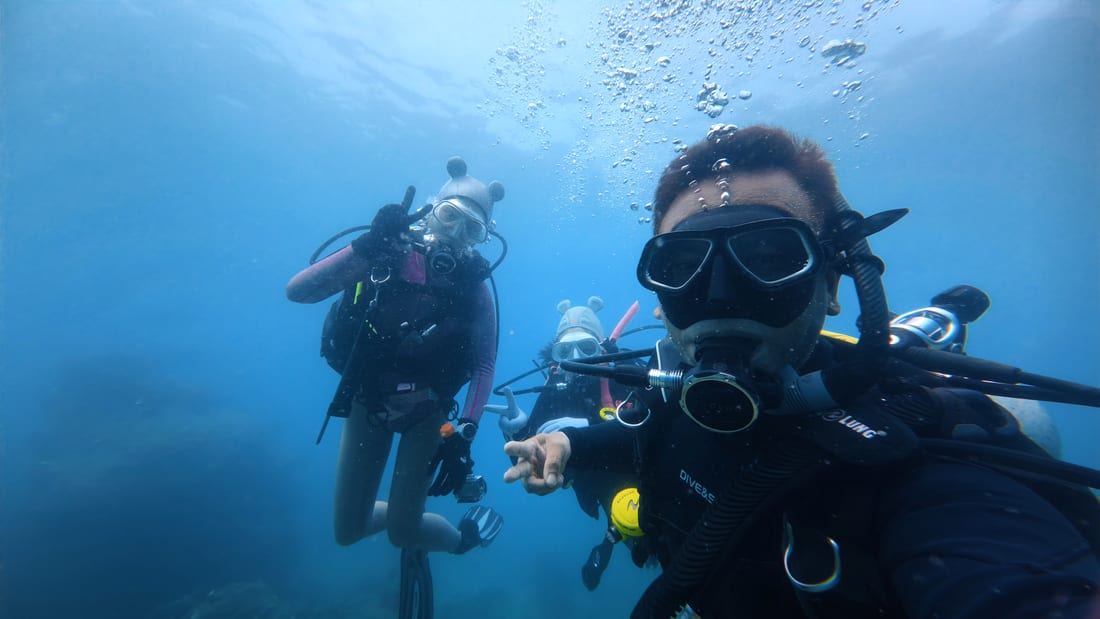
Before — Advanced Diver
- You can look after yourself at depth — but you would freeze if your buddy could not
- A stressed diver reads to you as "a bit nervous", and you hope it passes
- If someone surfaced unresponsive, you would shout for help and wait for it
- You have never opened the emergency oxygen kit sitting on the boat
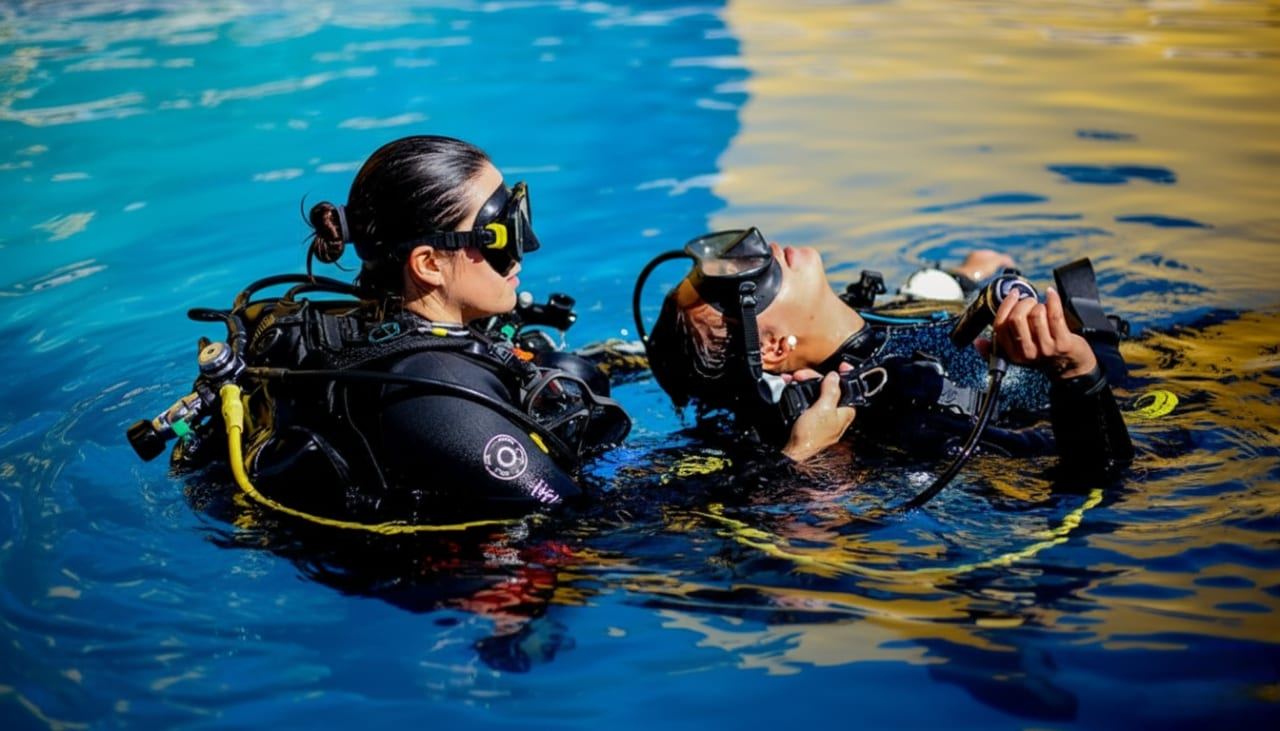
After — Rescue Diver
- You spot the stress on the surface interval, before anyone gets wet
- Tows, controlled ascents and equipment removal are muscle memory, not theory
- You run the scene: roles assigned, EMS called, oxygen flowing
- You are the diver every group quietly hopes is on the boat with them
See It Coming
Read stress and fatigue before they turn into an incident
Act in Seconds
Rehearsed responses instead of a blank moment
Run the Scene
Delegate, call for help, manage an accident from start to handover
Open the Pro Path
The required step before Divemaster and Instructor
The Journey to Rescue Diver
Each day hands you a bigger problem than the one before — and the skills to close it
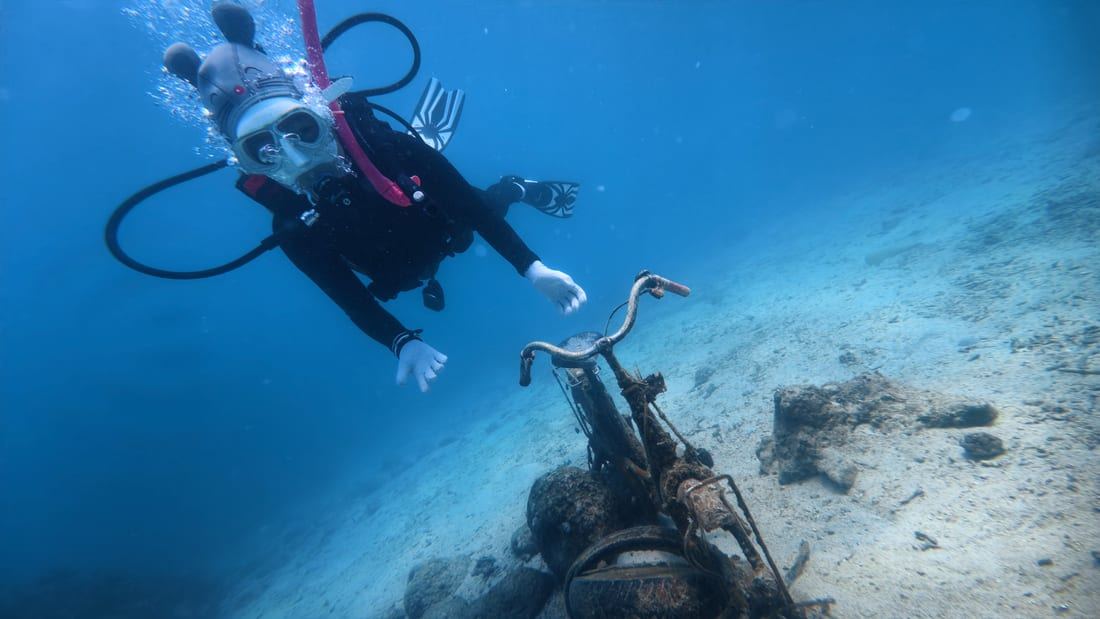
Self First
You cannot help anyone from inside your own emergency
What You'll Master
- Cramp removal, air sharing and gear problems solved underwater
- Emergency swimming ascent at a controlled rate
- Approaching and towing a tired diver at the surface
- De-escalating a panicked diver without becoming the second casualty
Ten Exercises, In This Order
Each one adds a variable the last one did not have. By Exercise 10 nobody is telling you what to do.
First: you get yourself out of trouble
Pool and confined water, before a single open-water exerciseCramp removal
Clear a leg or foot cramp without losing your buoyancy or your buddy.
Gear removal & recovery
Mask, fins and weight system off and back on again, underwater, calmly.
Emergency swimming ascent
Out of air and going up: the correct rate, the continuous exhale, no drama.
Navigate yourself home
Compass and natural references to find the boat when you are on your own.
Skills taught
- Surface approach techniques
- Buoyancy establishment
- Towing methods
- Equipment management
Five Chapters Behind the Skills
Short, practical and finished before you get in the water — so the exercises are about doing, not explaining.
Scenarios, Not Drills
No sequence to memorise. Your instructor sets the scene, then steps back and watches how you lead it.
Multi-Victim Emergency
The scene
More than one diver in trouble at a busy site, with fewer hands than problems. You triage, delegate and keep the scene safe while help is still on its way.
What you are assessed on
- Rapid situation assessment and triage decisions
- Effective delegation and resource management
- Clear communication with emergency services
- Rescuer and victim safety maintained throughout
- Proper documentation and incident reporting
Deep Water Technical Rescue
The scene
An unresponsive diver at depth, entangled, in current. You bring them up under control while a surface team works the other end of the problem.
What you are assessed on
- Safe descent and approach to the victim at depth
- Disentanglement without causing further injury
- Controlled ascent with an unconscious diver
- Team coordination and backup diver management
- Post-rescue care and evacuation preparation
Emergency First Response
CPR and first aid on land, so that the in-water skills have somewhere to hand over to. Required before certification — bundled at a lower price when you take it with Rescue.
A full Rescue Diver course is $525 in total — $425 for Rescue plus $100 for EFR. If your EFR certification is still current (within 24 months), you skip this entirely and pay $425.
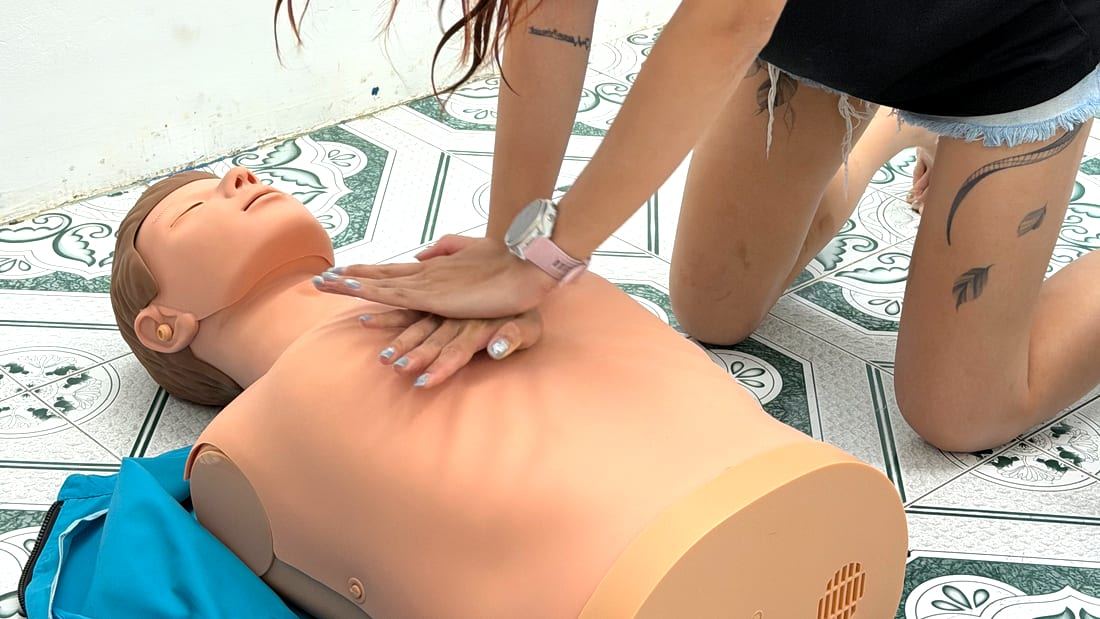
Primary Care (CPR)
Cardiopulmonary resuscitation and emergency response
- Adult CPR techniques and AED use
- Choking response and airway management
- Shock prevention and treatment
- Spinal injury assessment and immobilisation
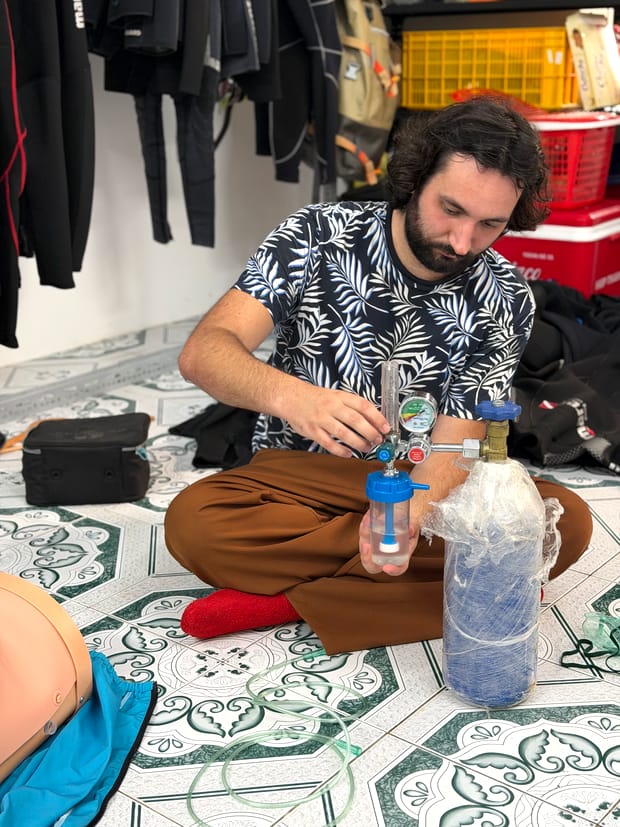
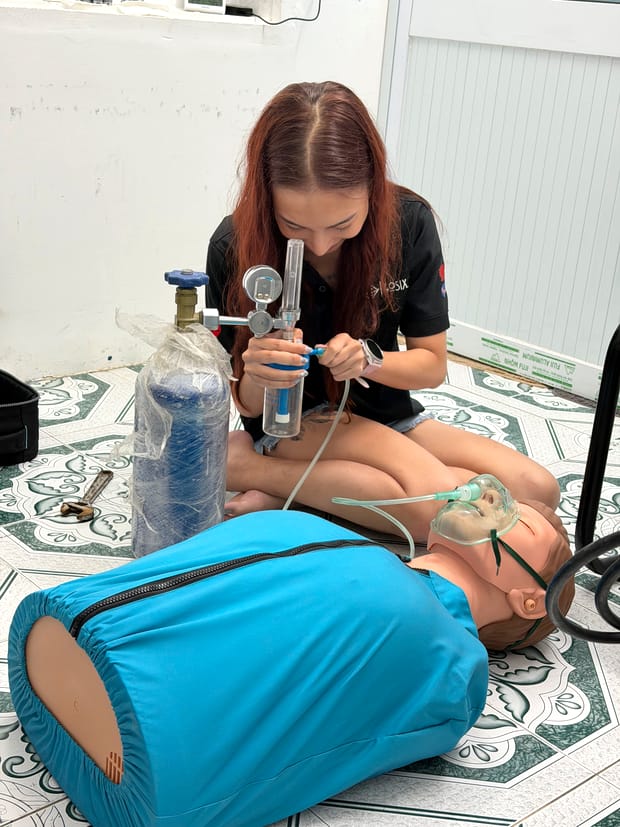
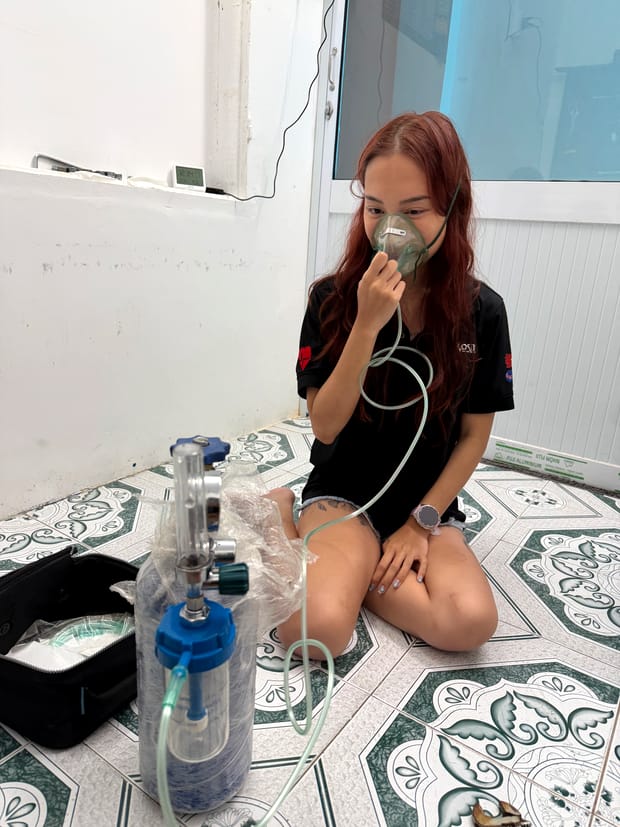
- Emergency oxygen administration basics
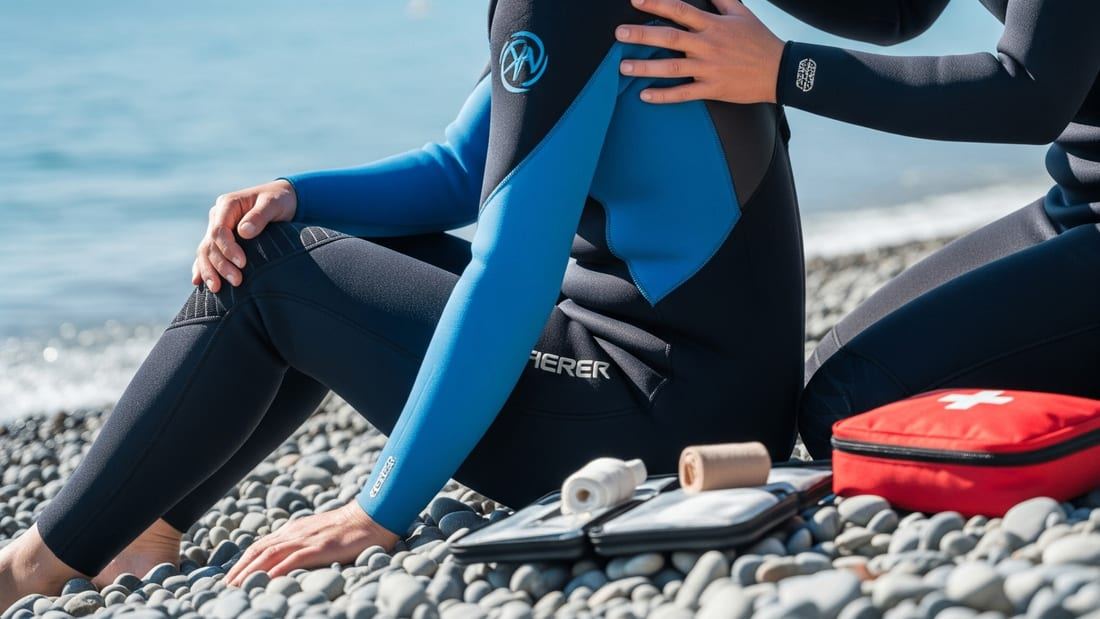
Secondary Care (First Aid)
Assessment and treatment when help is minutes away
- Injury assessment and patient examination
- Bandaging and wound care techniques
- Splinting for fractures and dislocations
- Illness assessment and management
- Heat and cold related illness treatment
What the Emergency Care Day Looks Like
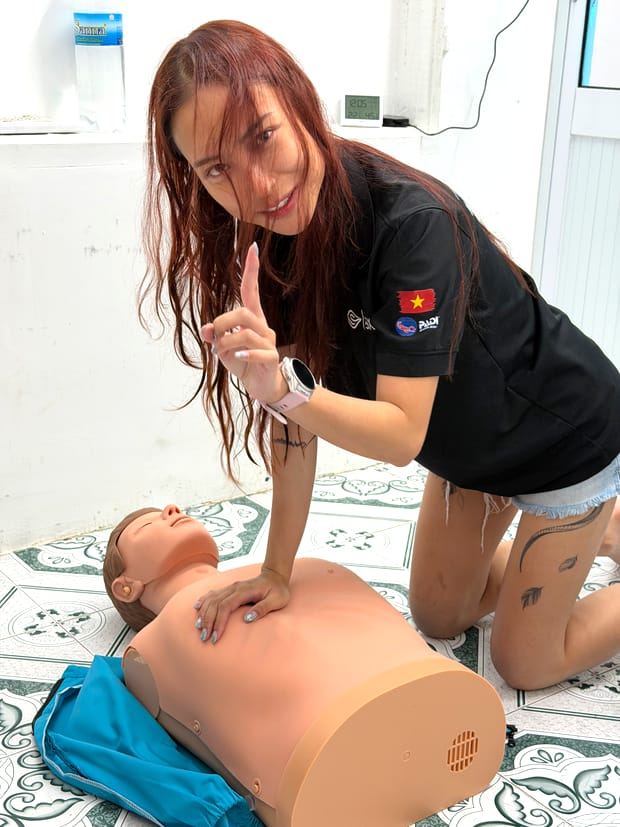
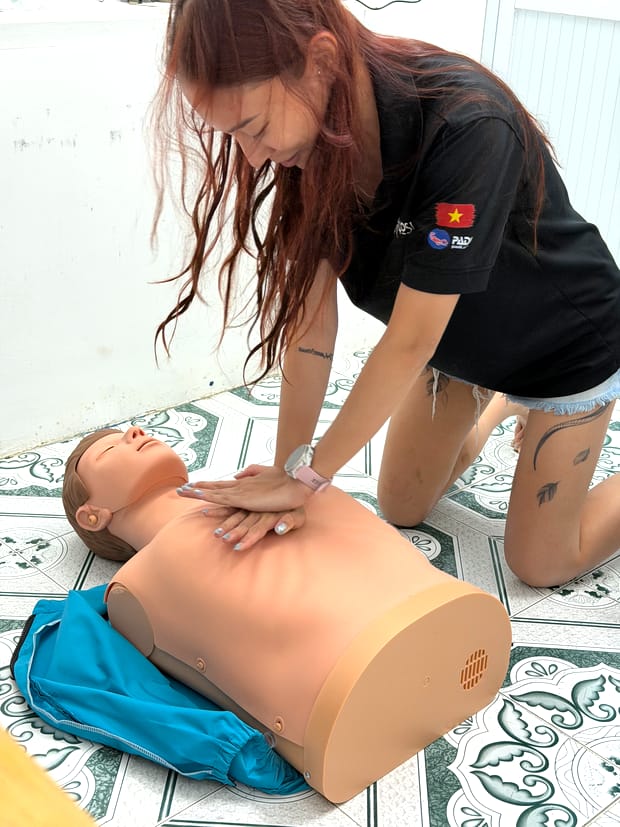
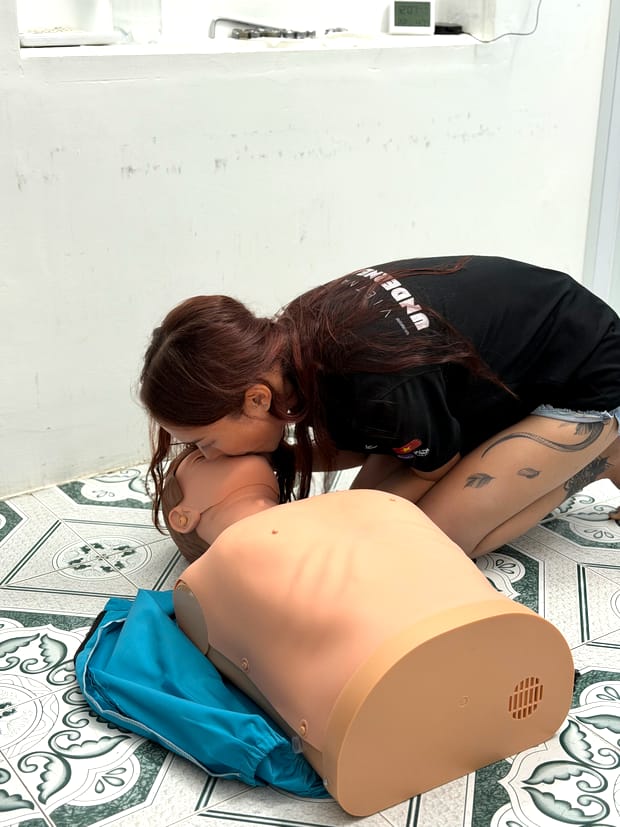
Photographed on a recent Rescue & EFR course at our Nha Trang centre. Not models, not stock — the people who were in the room, and the oxygen kit that travels on the boat with you.
 01
 02
 03
 04
 05
 06
What a Rescue Card Actually Changes
The doors it opens, and the diver it makes you on every dive after
The Gateway to Going Pro
Rescue Diver is the required step before PADI Divemaster and Instructor. Every dive professional you have met started here.
Professional prerequisiteEmergency Oxygen Provider
You finish certified to set up and deliver emergency oxygen — the single most useful thing to know on a dive boat.
Certification includedThe Buddy People Want
Dive centres, guides and friends notice a Rescue card. It says you are someone who adds safety to a group rather than consuming it.
Trusted in the waterComposure That Transfers
Rehearsed decision-making under pressure does not stay underwater. Graduates say it changes how they handle emergencies on land too.
Skills for lifeLiveaboard and Remote Ready
On trips far from a hospital, the crew wants trained divers aboard. Rescue is the credential that answers that question.
Remote trip confidenceFewer Incidents Happen Near You
Most of this course is prevention. The gear checks, the briefings and the stress-spotting mean problems get solved before they start.
Prevention firstWhat Changes After Rescue
Divers who came for the certification and left with something else

A Rescue & EFR class on the boat — Nha Trang bay
Transformed my understanding of dive safety. The scenario-based training prepared me for real incidents I later encountered as a Divemaster.
The academic rigor and medical integration exceeded expectations. Essential training for anyone serious about diving leadership.
Our Guarantees to You
This is the demanding course. We remove everything else you might worry about.
Flexible Payment
Pay a deposit now and the balance on Day 1. No financial pressure.
Low deposit onlyRepeat Any Exercise
Rescue skills are not a race. Repeat any of the ten exercises until it is yours, at no extra cost.
Extra practice includedWeather Promise
Free reschedule when conditions are not right for scenario work. No questions.
Free rescheduleOxygen Certification Included
Emergency Oxygen Provider training is part of the course, not a paid add-on afterwards.
No hidden add-onsSmall Groups, Always
Six students maximum, so nobody spends the scenario standing on the boat watching.
Max 6 studentsSupport Standing By
Emergency oxygen and first aid stay on site for every session, with a direct line to local emergency services.
On site, every sessionAre You Ready for Rescue?
Tick what is already true. It takes twenty seconds and it saves a phone call.
Meet Our Lead Instructor
Learn from an experienced, PADI-certified Master Scuba Diver Trainer

HuyNguyễn
Master Scuba Divers Trainer“Safety is a habit you practice on every dive—never a checkbox.”
Huy Nguyen teaches scenario-based training with an emphasis on risk assessment, human factors, and deliberate practice. His courses follow a university-style structure: clear outcomes, coached repetitions, and objective assessment so divers build durable competence.
Before focusing on instruction he guided extensively around Nha Trang and the South Central Coast, logging varied conditions from gentle reefs to surge and current. This breadth informs realistic briefings and safety planning for new and advanced divers alike.
Huy mentors small cohorts and integrates local reef-care habits—buoyancy discipline, finning that protects coral, and respectful wildlife interactions—so every dive contributes to an ocean-positive culture.
Elite Instructor
PADI's recognition for its top-performing instructors — 4 years earned.
13 Certifications
Every credential below is independently checkable on PADI's official Pro Chek directory. Tap a certification to read what it covers — and tap Verify to confirm it directly with PADI.
Rescue Diver, Answered
Do Not Wait for the Dive That Teaches You This.
Three days now, so that the moment it matters you already know what to do. One message, no pressure — we will help you pick dates that work.
- Taught by PADI Master Scuba Diver Trainers with real rescue experience
- Small groups, six students maximum
- Scenarios run in genuine Nha Trang conditions
- Emergency Oxygen Provider certification included
- Full dive gear and all training materials included
What a full Rescue Diver course costs
Already hold a current EFR certification (within 24 months)? You pay $425 — no EFR charge.